At the core of steam systems—the outlets of boilers and steam generators—pressure monitoring is critical for ensuring safety, enhancing efficiency, and stabilizing processes. Therefore, the proper selection and installation of industrial pressure transmitters are essential.
I. Precise Selection
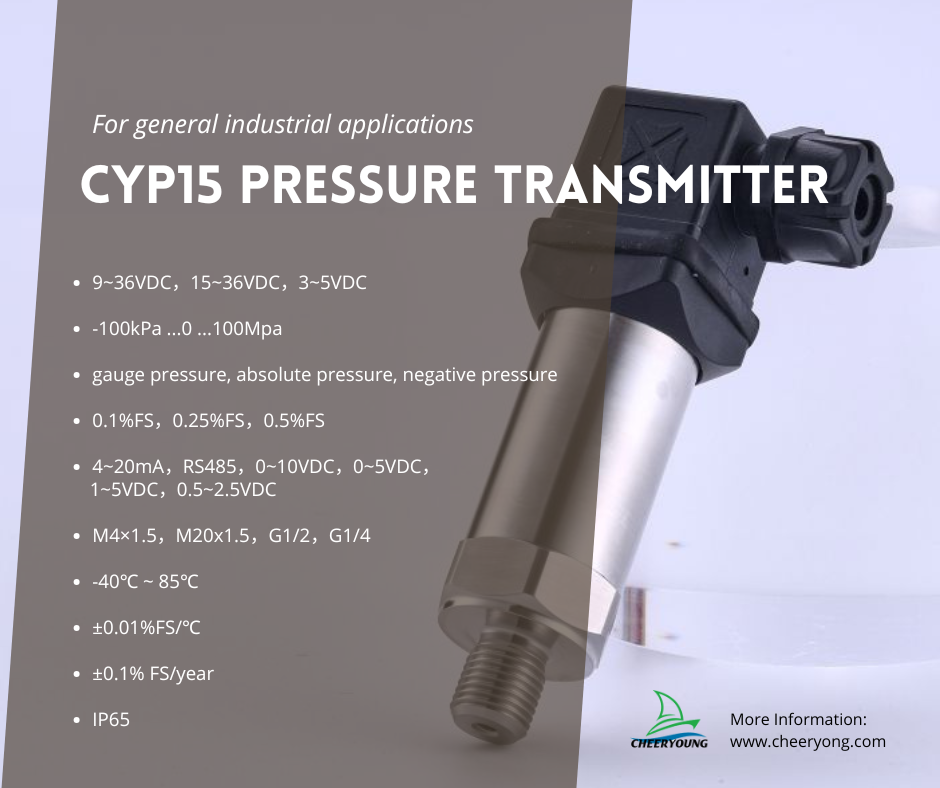
1. Range and Accuracy: Boiler outlet pressures are high. First, select a model with a range covering approximately 1.5 times the design working pressure. The CYP15 offers an extensive range up to 100 MPa and high accuracy of 0.1% FS, enabling precise capture of pressure fluctuations and providing reliable feedback to combustion control systems.
2. Output Signal and Power Supply: For compatibility with DCS or PLC control systems, prioritize interference-resistant 4-20mA analog signals or RS485 digital signals. CYP15 offers multiple output options, with its 9-36VDC wide voltage supply particularly suited for voltage fluctuations in industrial environments.
3. Temperature Resistance and Stability: With extremely high outlet steam temperatures, the sensor must withstand high-temperature environments. The CYP15 supports medium temperatures from -40°C to 85°C, featuring low temperature drift of ±0.01% FS/°C. Combined with exceptional long-term stability of ±0.1% FS/year, it delivers consistent accurate data, minimizing the need for frequent calibration.
4. Mechanical Interface: Select an installation interface matching the field pressure tapping point, such as common G1/2 or M20×1.5 threads. CYP15 offers multiple interface options for easy installation.
II. Proper Installation
Install using a condensation bend (siphon tube) to fill its interior with condensate, creating a protective barrier that prevents direct high-temperature steam impact on the sensor diaphragm. This safeguards against damage and ensures measurement accuracy. Position pressure taps at the top or side of the pipeline to avoid sediment blockage. After installation, ensure the cable interface faces downward and is properly sealed to achieve IP65 protection rating, preventing moisture ingress.
III. Routine Inspection and Maintenance
Periodically inspect the sensor housing for mechanical damage or severe corrosion. Pay particular attention to the sealing rings at the wiring terminals for signs of aging or damage to maintain the effective IP65 protection rating and prevent moisture or dust ingress. Verify that threaded connections between the sensor, condensation bend (siphon tube), and process interface are secure and show no signs of steam leakage. It is recommended to perform offline calibration at least once annually, comparing readings with a standard pressure gauge to ensure measurement accuracy meets process requirements.
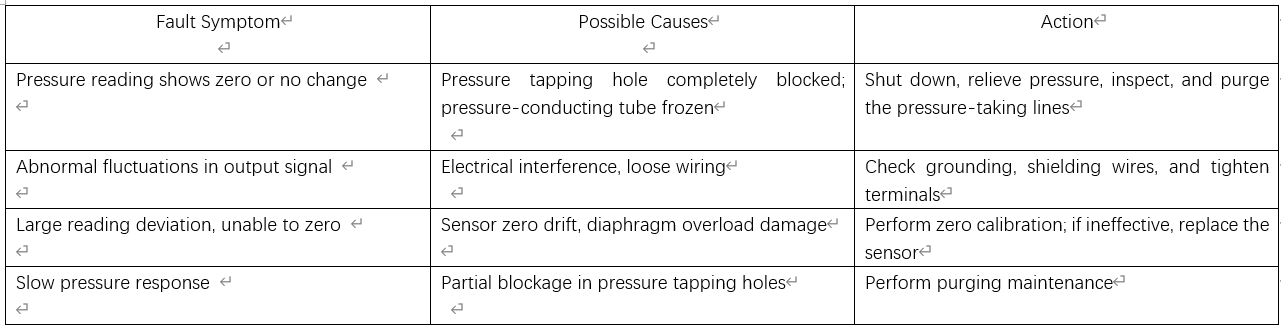
IV. Common Faults and Solutions